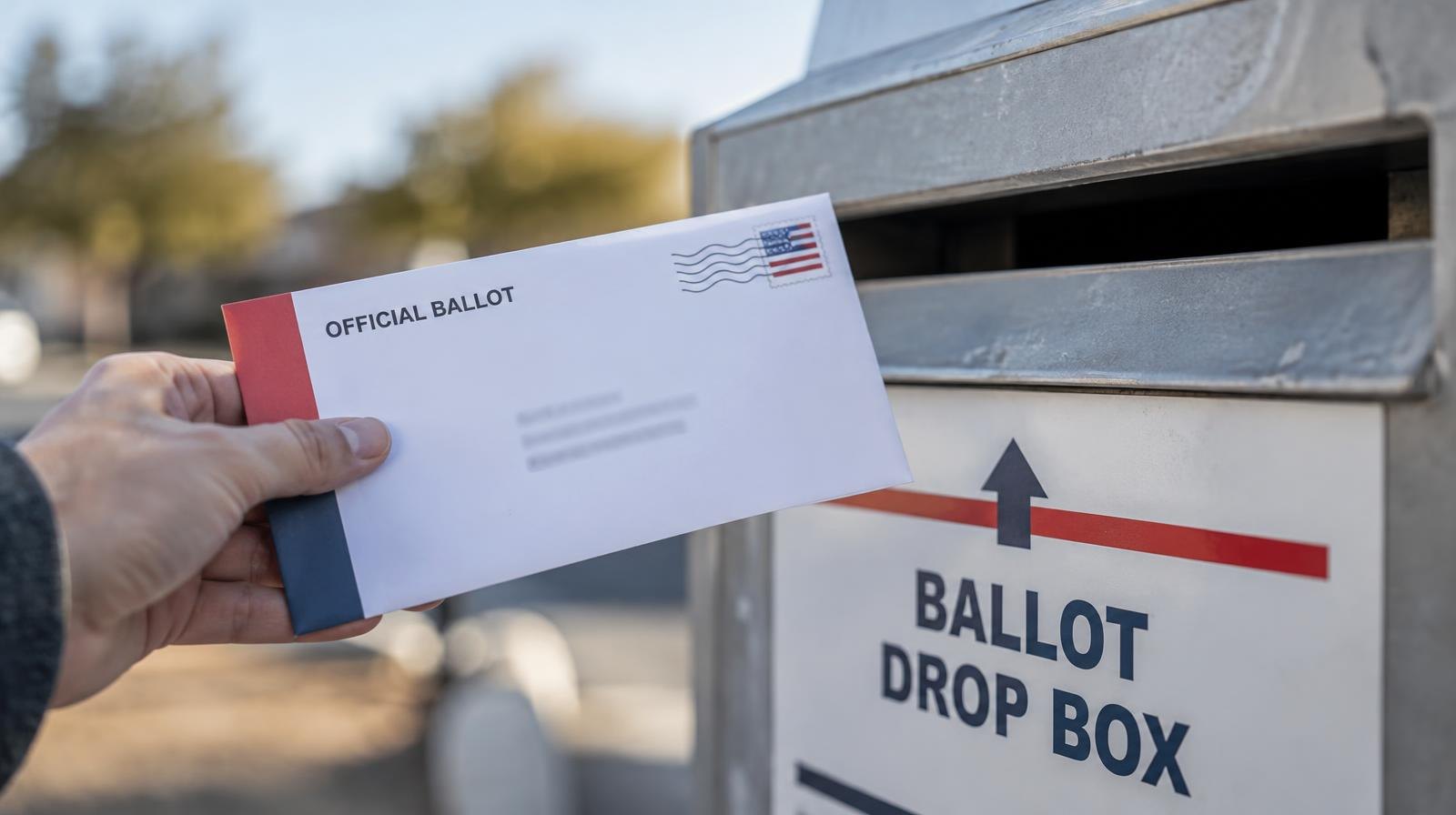
Riverside County told federal prosecutors it will not set aside 1,355 mail-in ballots the U.S. Department of Justice (DOJ) flagged as belonging to alleged noncitizens, citing a federal judge's ruling and the logistical impossibility of doing so.
The county's response, sent Thursday through the Office of County Counsel, came as courts have twice blocked the Trump administration's push to stop California from counting up to 20,000 disputed ballots before Tuesday's midterm election, according to KESQ.
"In light of the Court's order issued on October 28, 2026, and the logistical impossibility, the ROV is unable to segregate the 1,355 ballots of named individuals as requested," the county's letter to First Assistant U.S. Attorney Bill Essayli stated, according to KESQ.
The dispute began when Essayli sent a letter dated Monday, Oct. 26, to Riverside County Registrar of Voters Art Tinoco. The letter gave the county 48 hours to work with the DOJ and the Department of Homeland Security (DHS) to verify the citizenship of 1,355 people the federal government described as "likely aliens," as first reported by The Press-Enterprise.
County elections spokesperson Elizabeth Florer confirmed receipt of the letter to The Press-Enterprise but said at the time that officials had not yet reviewed its contents.
Two courts block DOJ's ballot demands
On Oct. 28, U.S. District Judge David Carter denied the DOJ's request for a temporary restraining order that would have forced California to stop processing the disputed ballots statewide.
Carter wrote that the request "would wreak havoc and disrupt the election that is already underway, create a chilling effect on election workers and voters alike, and discount the votes of United States citizens," according to PBS NewsHour.
The DOJ immediately appealed. On Friday, the Ninth U.S. Circuit Court of Appeals rejected that second appeal in a 2-1 ruling, according to CBS News. Judges Mark Bennett, a Trump appointee, and Gabriel Sanchez wrote that "there is no feasible way to identify and segregate the ballots of specific individuals without potentially catastrophic effects on the entire system."
Judge Patrick Bumatay dissented.
DOJ lawyers have said they may appeal to the U.S. Supreme Court, according to PBS NewsHour.
Competing arguments
The DOJ filed its lawsuit against California on Oct. 15, alleging that federal agencies identified more than 20,000 registered voters they suspect are noncitizens after comparing state voter-registration records with immigration data. The suit names California Secretary of State Shirley Weber and Los Angeles County Registrar Dean Logan.
Essayli argued at an Oct. 27 hearing that the government was making "a very narrow request" to temporarily set aside ballots, according to the Daily News. "We have not asked to void any ballots," he said.
California officials countered that the federal government's data is unreliable. State attorney Michael Cohen said the administration used data "known to be unreliable" in compiling its list, according to the Daily News. State attorneys also noted the initial federal estimate of 190,000 alleged noncitizen voters dropped to 20,000 by October.
Carter questioned why the DOJ pursued a civil lawsuit rather than criminal prosecutions. "You got a remedy for goodness sakes — go out and indict," Carter told Essayli, according to the Associated Press.
He also warned federal authorities to stop threatening election workers. "This court believes it would be wise that any threats to state and county election employees cease immediately," Carter said before leaving the courtroom, according to the AP.
What's next
The district court set a hearing for Friday, Nov. 13, and ordered both sides to submit witness lists by Nov. 6, according to Democracy Docket. California's deadline to certify election results is Dec. 3.